Dynamic Strength Index, or DSI, is a performance metric used to assess the relationship between an athlete’s maximal strength and their ability to express that strength dynamically.
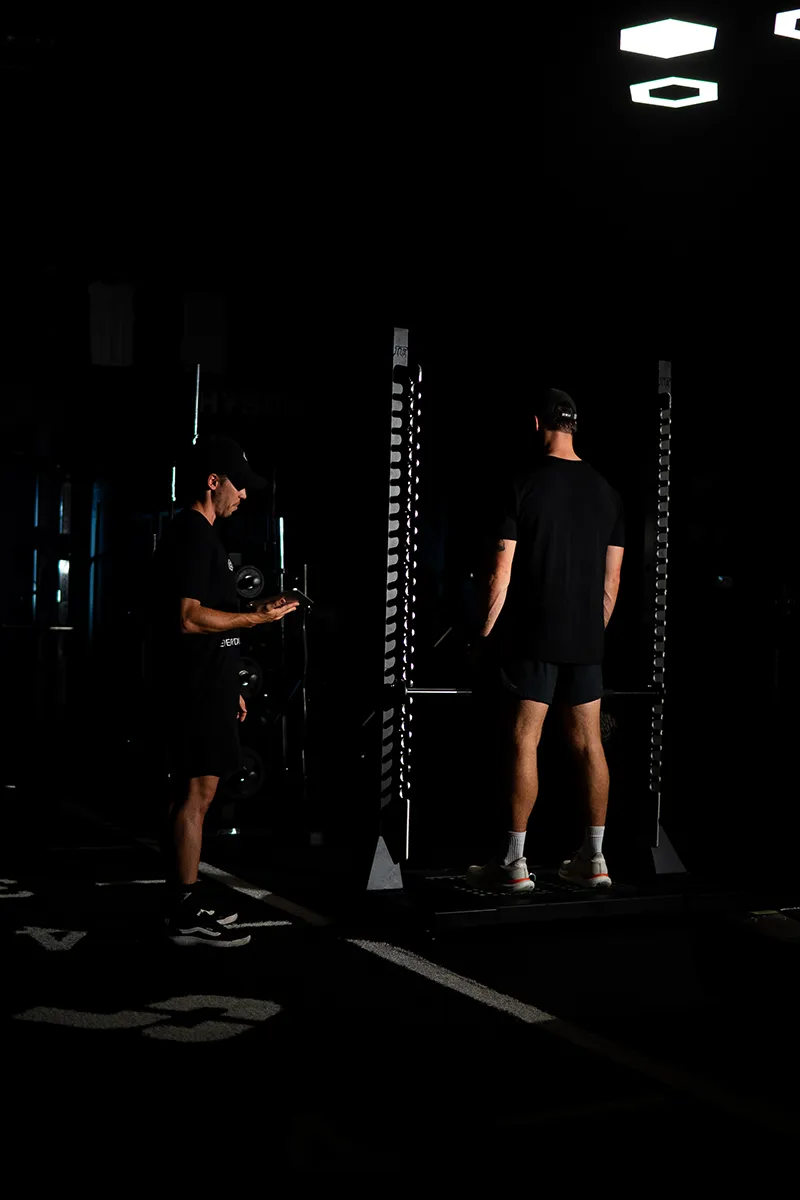
At Hybrid HQ, we calculate this by comparing two testing protocols:
- Isometric Mid-Thigh Pull (IMTP)
- Countermovement Jump (CMJ)
Put simply:
DSI tells us how effectively someone can convert strength into power
What Does DSI Measure?
In practical terms, DSI helps us determine whether an individual is:
- Very strong but lacks explosiveness
- Naturally explosive but underdeveloped in strength
- Balanced between the two and benefits from both training styles
This gives us clear direction on what their program should prioritise.
How Is DSI Calculated?
DSI is calculated by comparing:
Countermovement Jump Peak Force ÷ Isometric Mid-Thigh Pull Peak Force
This ratio gives us a score that helps identify where the athlete currently sits.
Interpreting DSI Scores
High DSI (>0.80)
A high DSI generally suggests the athlete is:
- Good at applying force quickly
- Naturally explosive
- Potentially lacking maximal strength capacity
Training Focus:
Increase maximal strength development
Low DSI (<0.60)
A low DSI generally suggests the athlete is:
- Strong in absolute force production
- Less efficient at expressing force quickly
Training Focus:
Increase explosive / ballistic / plyometric training
Mid-Range DSI (0.60–0.80)
A mid-range score suggests the athlete sits in a balanced position.
Training Focus:
Concurrent development of both strength and power
Why Is This Important?
Without objective testing:
You’re guessing.
DSI allows coaches to remove the guesswork and make informed programming decisions based on real data.
Rather than blindly adding more strength work or more power work, we can clearly identify:
- What the athlete needs most
- What qualities are limiting performance
- Where training should be directed for the best return
Final Takeaway
Dynamic Strength Index is one of the most valuable tools for bridging the gap between testing and programming.
It tells us not just how strong someone is, but how well they use that strength.
Because at the end of the day:
Strength without expression has limits
Power without strength has ceilings
The goal is knowing what the individual needs – and training accordingly.